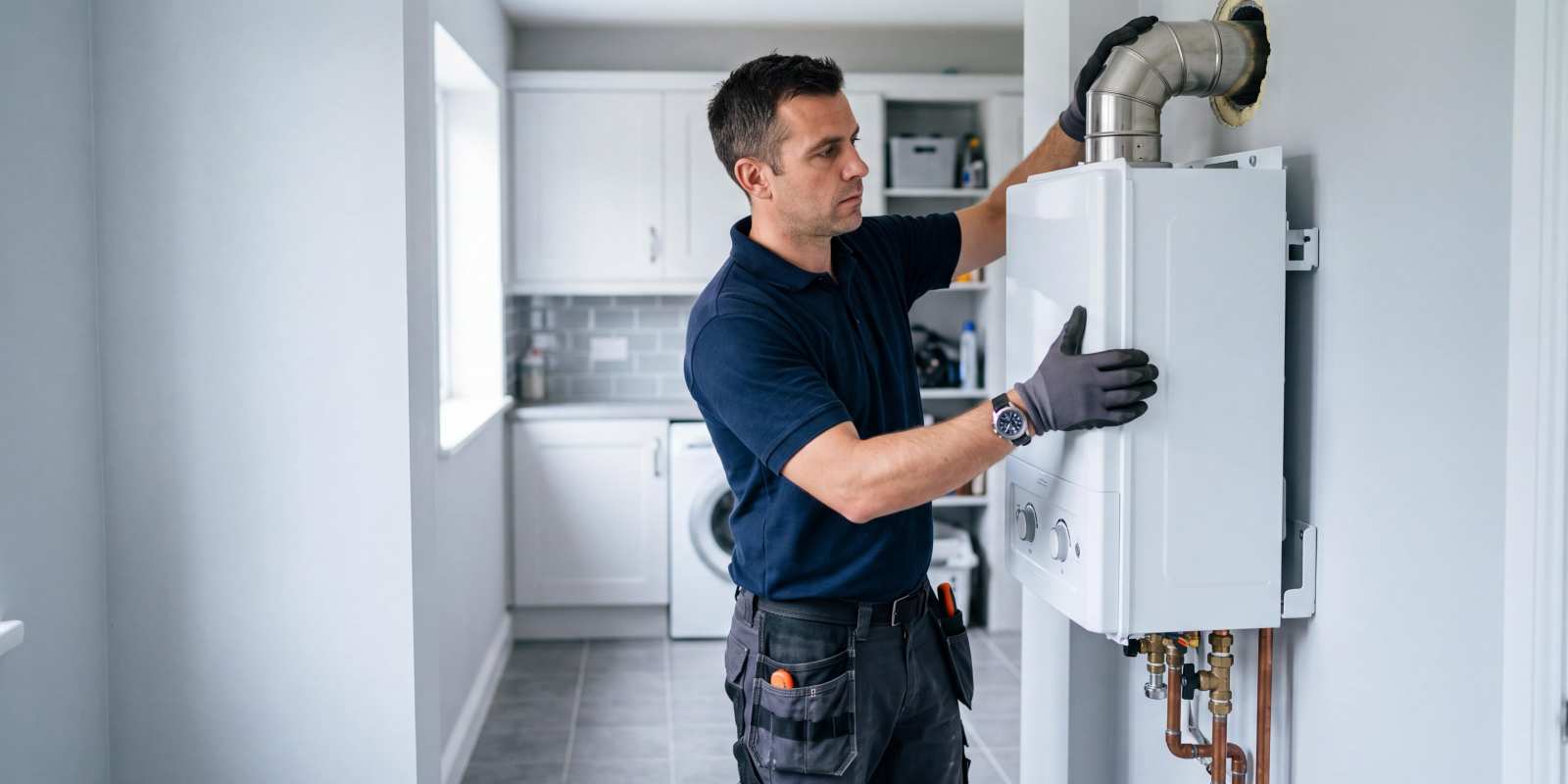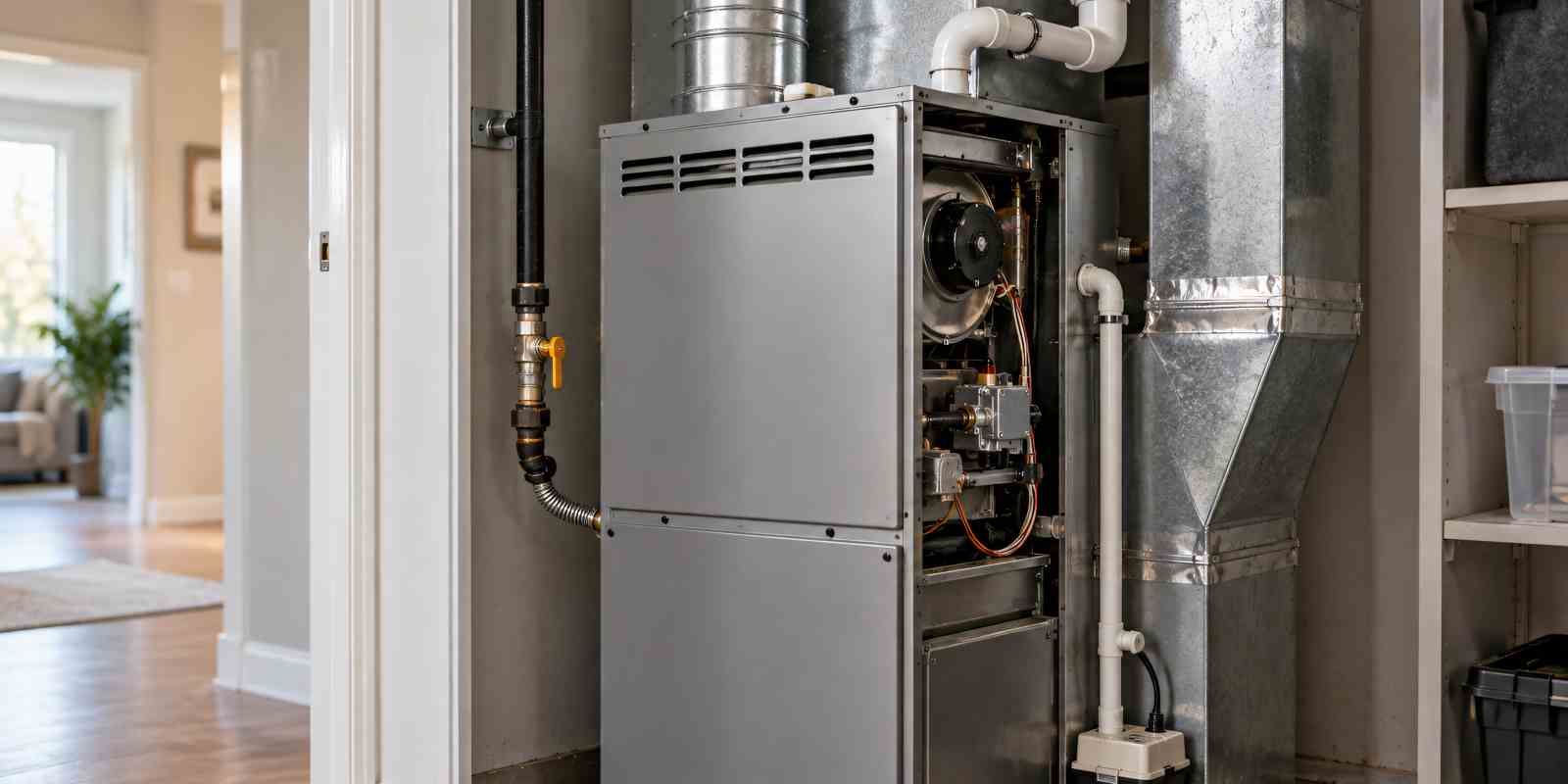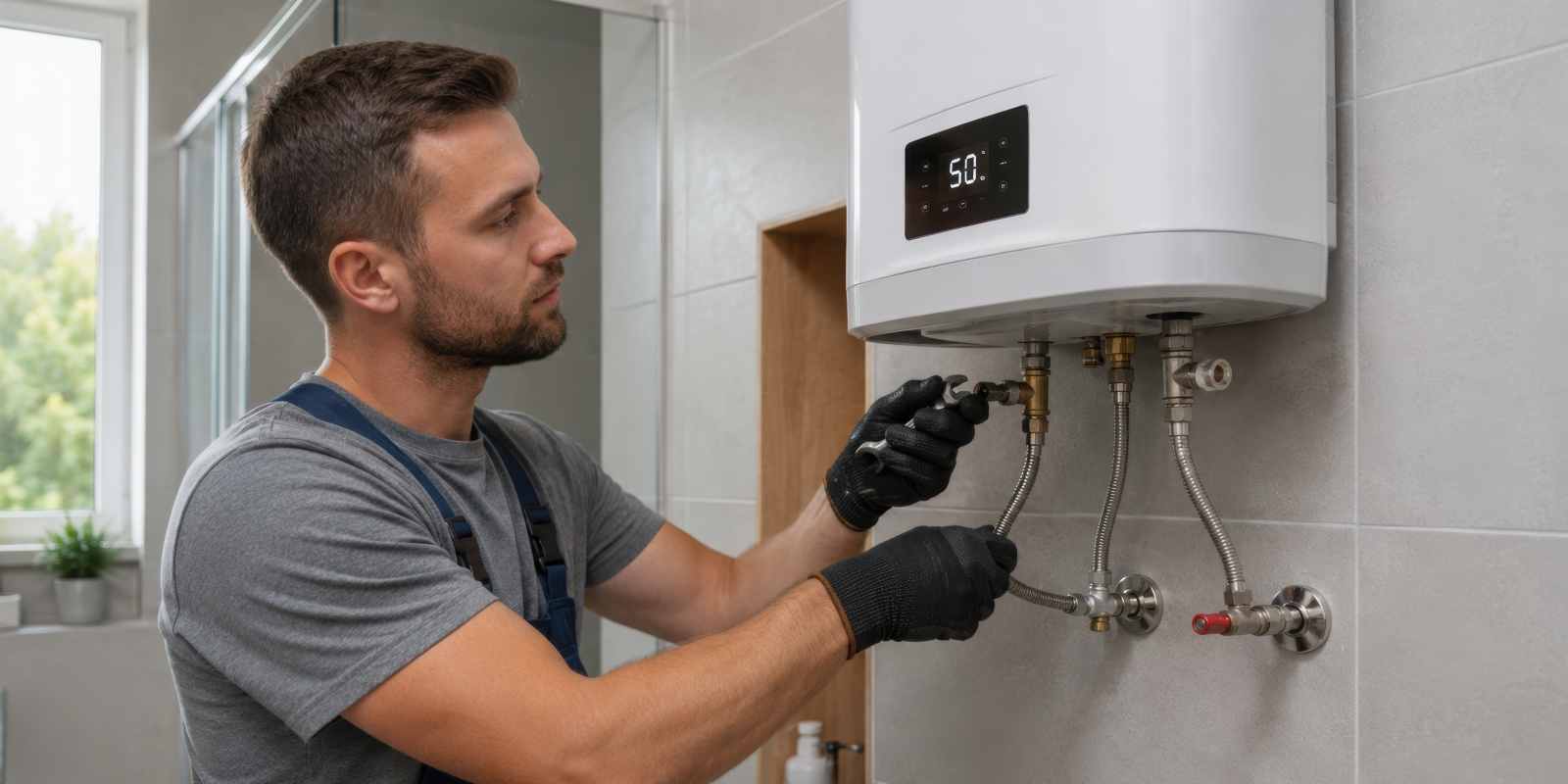

Replacing an old boiler might seem simple: check its capacity and buy a new model of a similar size. Yet proper boiler sizing depends on how much heat your home needs now, which may differ greatly from what it needed decades ago.
U.S. Boiler Company reports finding older boilers oversized by 100% or more, particularly in homes upgraded with new windows, doors, insulation, and air sealing, though many new boilers are also oversized. A like-for-like replacement can carry that excess capacity into a brand-new heating system.
What Short Cycling Does to an Oversized Boiler
A bigger boiler can produce heat quickly, but extra capacity doesn’t necessarily translate into greater comfort. An oversized boiler may meet the heating demand quickly, shut off, and fire again shortly after. As the Department of Energy notes, these frequent starts and stops reduce efficiency.
Repeated starts and stops can waste fuel, increase component wear, and lead to premature breakdowns. U.S. Boiler documented one replacement scenario where a boiler chosen to roughly match the old equipment averaged run times of just three minutes.
A later heat-loss calculation put the home’s requirement at 70,000 Btu/h, revealing that the replacement had far too much capacity. Longer, steadier operation generally gives a properly selected boiler a better opportunity to heat the home efficiently.
How a Heat-Loss Calculation Sets the Right Size
You shouldn’t answer, “What size boiler do I need?” with square footage alone. A heat-loss calculation estimates how much heat escapes through the home’s building envelope under winter design conditions.
Factors such as insulation, windows, doors, air leakage, and outdoor design temperature can influence the result. Instead of estimating HVAC demand from square footage alone, professionals can use ACCA’s ANSI-recognized Manual J methodology to calculate a home’s heating and cooling loads in a standardized way. A Manual J load calculation or another appropriate heat-loss method provides far better information than a basic boiler-size calculator based primarily on square footage.
The difference can be substantial. ACHR News documented a 2,300-square-foot home with a calculated heat loss of only 58,000 Btu/h, despite having a 200,000-Btu boiler. The homeowner had added insulation and storm windows over the years. For a hot-water boiler replacement, the calculation should reflect the house you’re heating today, not simply the specifications of equipment installed years ago.
Steam Systems Follow Different Rules
Steam heat requires a different approach. A replacement steam boiler is sized based on the connected radiation, rather than selecting capacity solely from the home’s heat-loss calculation. Older Westchester homes can have numerous cast-iron radiators of different sizes. Measuring each radiator lets the contractor calculate the connected radiation the boiler must serve.
Questions worth asking before accepting a boiler quote include:
- How was the recommended boiler capacity determined?
- What was the calculated heat loss for my home?
- Which boiler output rating was used to select the model?
- For steam heat, did you measure every connected radiator?
- For a modulating boiler, what is its minimum firing rate?
The answers can reveal much more about a proposal than the maximum Btu number printed on the equipment specifications.
Why Modulating Boilers Change the Math
A modulating condensing boiler can adjust its firing rate as heating demand changes. DOE guidance explains that modulation lets a boiler reduce burner output as the heating load falls, which can reduce the need for repeated cycling during lower-load conditions.
A burner’s turndown ratio indicates how far it can reduce its firing rate from maximum output while continuing to operate within its intended modulation range. For example, DOE explains that a boiler capable of dropping to 20% of maximum output has a 5:1 turndown ratio.
Modulation doesn’t make proper sizing unnecessary. During mild weather or when a small heating zone calls for heat, even the boiler’s lowest firing rate can exceed the demand. Maximum capacity and minimum firing rate both deserve attention.
Home improvements should be part of the conversation, too. Better windows, added insulation, and reduced air leakage can lower heating demand, so an old boiler’s capacity shouldn’t automatically dictate replacement.
Questions to Ask When Comparing Quotes
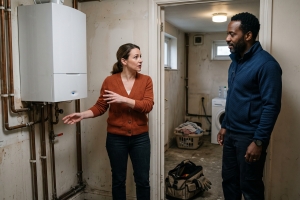
When comparing boiler replacement options in Westchester, NY, ask to see the calculations behind each recommendation. For a hot-water system, request the heat-loss result and ask the contractor to explain the boiler’s applicable output rating in writing. Steam-system owners should ask how the contractor measured connected radiation.
A proper boiler sizing calculation gives you a solid reason to choose a specific capacity. A. Borrelli Mechanical can evaluate your home’s heating requirements and recommend equipment based on the system and the home it serves. Call (914) 359-3479 to discuss boiler sizing and replacement for your Westchester home.