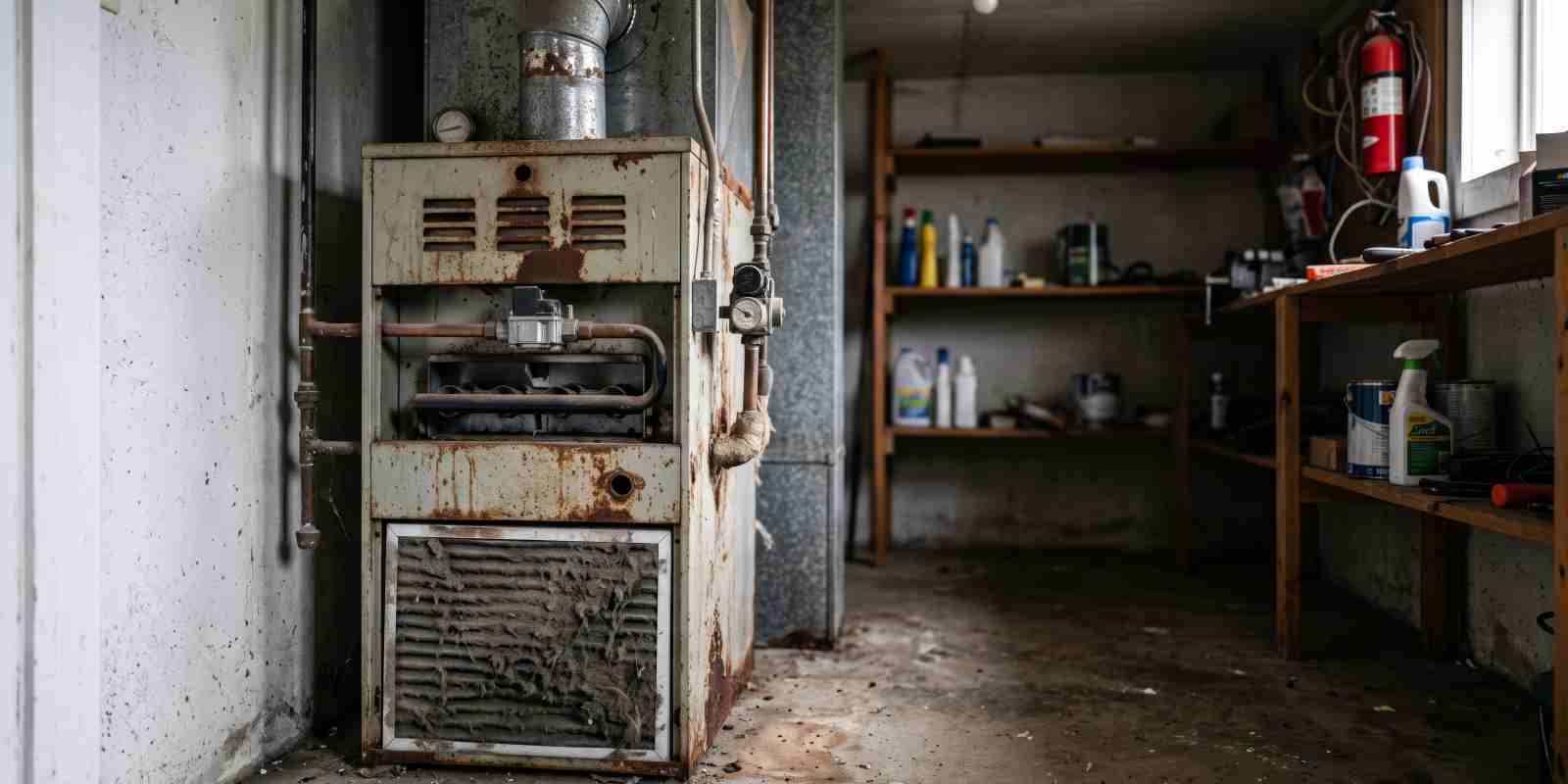
Banging radiators, declining performance, more frequent breakdowns, and leaks or corrosion are the usual signals that a boiler is nearing the end of its life. Once a technician recommends replacement, homeowners might wonder what happens to everything the boiler connects to.
In a home still running on steam radiators, the new boiler has to be piped and sized to match the radiators already in the house. Get that wrong and radiators that were heating fine start banging or underperforming, even though nothing about the radiators themselves changed. A boiler installation in a steam-heated Westchester home almost always leaves the radiators exactly where they are.
Why Steam Is Still Everywhere in Westchester
Steam heating was standard through the early 20th century, when much of Westchester’s housing stock was built, including entire neighborhoods in Yonkers, Mount Vernon, White Plains, and the river towns. Hot water heating and forced air didn’t become common until well after World War II.
Steam also persists because boilers and radiators have different service lives. Cast iron radiators outlast boilers, so a home may go through several boilers while the radiators stay in place and the homeowner never pays to replace the entire system.
What Gets Replaced and What Stays
A steam boiler replacement involves the boiler itself, plus everything connected to it within a few feet. That includes the piping near the boiler, the header that collects steam before it heads to the mains, the equalizer and Hartford loop that keep return water from flooding into the boiler, the low water cutoff, and the pressure control.
Everything past that, including the radiators, the risers that feed them, and most of the horizontal piping under floors and walls, usually stays. If a radiator isn’t leaking and its piping is pitched correctly toward the boiler, there is no reason to touch it. The exception is a radiator repiped incorrectly during a past renovation, perhaps when a moved wall or floor left the original pitch off.
The starting point for a proper job is a radiator survey. The technician should walk the house, measure every radiator, and add up the square footage of radiation the system has to serve. The installer then picks a boiler from the manufacturer’s published rating tables, matching its output in square feet of equivalent direct radiation (EDR) to the surveyed total.
Skipping the survey and simply matching a new boiler to an old nameplate is a common reason that new boilers underperform.
Sizing Steam Is Not Like Sizing a Furnace
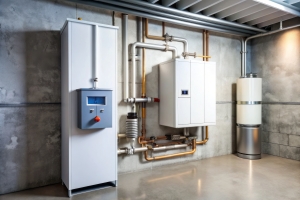
A new furnace or hot water boiler is sized against a heat loss calculation, a room-by-room tally of how much heat escapes through the walls, windows, roof, and air leaks on the coldest day the area is expected to see.
A steam boiler has to produce enough steam, fast enough, to fill every radiator before the thermostat is satisfied. That depends on the total square footage of connected radiation (EDR), not on the size of the house or how well it is insulated.
A larger boiler does not heat a steam home more effectively. A boiler that outputs more steam than the connected EDR calls for cycles on and off too fast for the system to distribute heat. The result is banging pipes and rooms that never get comfortable, which homeowners often attribute to old radiators.
Staying on Steam Versus Converting
If an inspection finds that an old boiler has reached the end of its service life, homeowners have three paths to choose from.
| Option | Trade Off | Best Fit |
| New steam boiler | Lowest upfront cost; existing radiators are kept in service | Sound radiators and piping, staying put long term |
| Convert to hot water | Higher cost; requires new piping and often new emitters throughout | A gut renovation is already underway |
| Add heat pumps alongside steam | Moderate cost; adds cooling may qualify for rebates | Owners want air conditioning and lower running costs |
Staying on steam is usually the right call when the radiators and piping are in good condition, because it keeps a working distribution system in place and avoids opening walls.
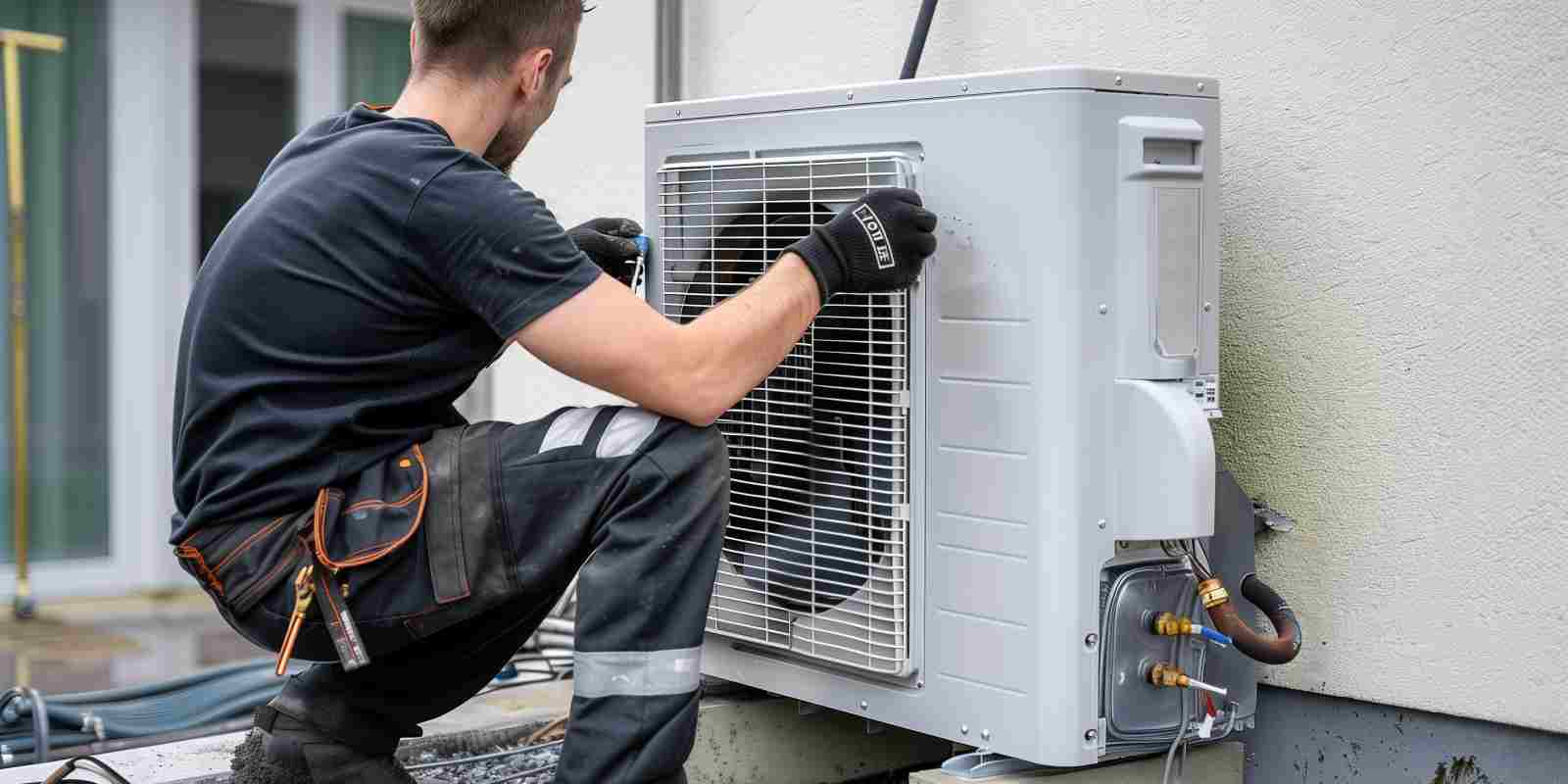
An air-source heat pump added alongside the steam boiler suits homeowners who want air conditioning along with heat. The boiler handles the coldest stretches of winter, while the heat pump covers shoulder season heating and summer cooling on its own. Installations like this can qualify for incentives through the NYS Clean Heat program administered by NYSERDA.
What a Quality Installation Looks Like
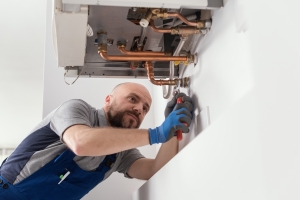
The piping closest to the boiler should match the boiler manufacturer’s published piping diagram exactly. The header height above the waterline, the pipe sizing on the equalizer, and the swing joints that let the piping expand as it heats all come from that diagram. Shortcuts here are a common cause of wet steam, which shows up as banging pipes and radiators that never quite get hot.
A technician should also rebalance the whole system after startup, not just the new equipment, checking the main vents on the steam mains and the individual vents on every radiator.
Ask contractors bidding on the job whether they perform a radiator survey and whether they will share the piping diagram and pressure settings they plan to use. Those two questions separate an installer matching the job to your house from one installing the same boiler they installed yesterday.
A steam system that has kept a Westchester home warm for nearly a hundred years deserves an installer who treats it that way. A. Borrelli Mechanical has done this work in Westchester County since 1981, and our technicians can walk your home, measure what is there, and lay out what a proper installation looks like for your radiators.
Message A. Borrelli Mechanical with questions about your system or to schedule an appointment. Your family’s comfort, our family’s commitment.