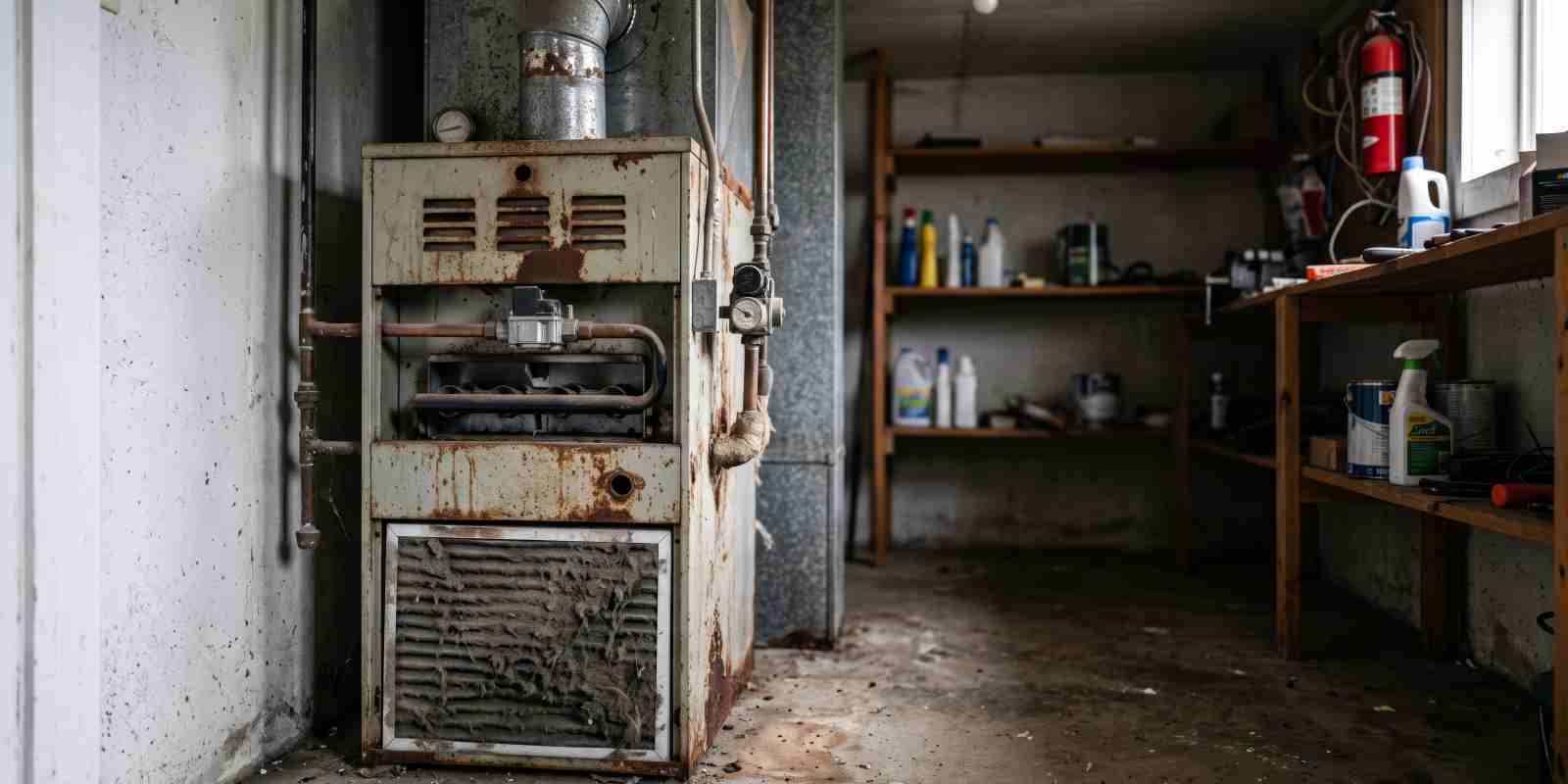
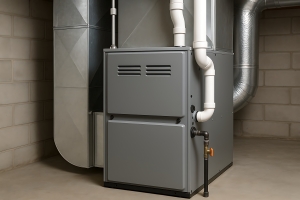
As a furnace reaches its tenth year, it needs more frequent professional service than it did when it was new. How much life the system has left depends on its fuel type, installation, and how well it has been maintained. A furnace that’s had steady annual service can outlast one that’s been neglected for years.
The Realistic Numbers by System Type
The U.S. Department of Energy uses a 21-year average lifetime for residential furnaces in its lifecycle cost calculations. That number is a national composite. The real range depends on fuel type, usage, and the parts in a specific system that tend to wear out first.
| System Type | Typical Service Life | What Usually Fails First |
| Standard-efficiency gas furnace | 15 to 20 years | Heat exchanger |
| High-efficiency condensing gas furnace | 15 to 20 years | Secondary heat exchanger and condensate components |
| Oil furnace | 20 to 25 years | Combustion chamber and nozzle assembly |
| Electric furnace | 20 to 30 years | Heating elements and sequencers |
The heat exchanger on a standard gas furnace tends to weaken over years of thermal expansion and contraction. Cracks become a real concern past the fifteen-year mark.
A condensing gas furnace has that same primary exchanger plus a secondary exchanger and a condensate drain system. In a standard furnace, burning the fuel produces hot water vapor that is vented outside. A condensing furnace sends that vapor through a secondary heat exchanger, where the vapor condenses into a liquid.
That liquid is acidic, with a pH between 3 and 4, and over time corrodes the secondary exchanger from the inside. A clogged drain line traps the water and speeds up that corrosion considerably.
Oil furnaces tend to outlast gas units because their combustion process puts less thermal stress on the heat exchanger. The trade-off is that the nozzle assembly and combustion chamber need annual attention. With regular service, those parts can last 20+ years.
Electric furnaces tend to have the longest service life because their process does not involve combustion. Heating elements and sequencers are the primary wear items, which can be replaced individually. This stretches total service life past what combustion-based equipment typically manages.
What Quietly Shortens a Furnace’s Life
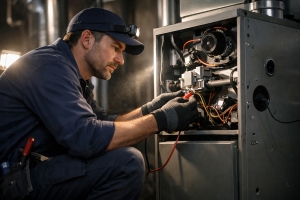
Most furnaces that fail early aren’t defective but are being forced to work harder than they were designed to.
A dirty filter restricts the airflow and forces the heat exchanger to run hotter. The system runs longer cycles to reach temperature, and that sustained heat accelerates metal fatigue. The same issue happens when supply or return vents are blocked by furniture, rugs, or closed dampers.
An oversized furnace creates a different kind of stress. A unit that is too large for the home heats the space quickly, shuts off, then fires again minutes later. This short cycling puts repeated thermal shock on the ignition system, heat exchanger, and blower motor.
A properly sized furnace runs two to three cycles per hour with burner-on times of 15 to 20 minutes. An oversized unit may cycle 8 to 10 times per hour with runs as short as four minutes.
Skipping annual service lets small problems cascade. A failing capacitor forces the blower motor to draw more current. A misaligned burner produces uneven heat across the exchanger. A dirty flame sensor causes repeated ignition attempts. A furnace with these issues will still function, but will suffer more strain with each use.
The Maintenance That Genuinely Adds Years
The single most effective way to extend your furnace’s service life is to change the filter on the manufacturer’s recommended schedule. For most systems, that means every one to three months, with the shorter interval for homes with pets, renovation dust, or higher occupancy.
ENERGY STAR recommends monthly filter checks for central heating systems. A clean filter protects the blower motor and heat exchanger.
Professional service before heating season is the second priority. The technician measures combustion efficiency, checks gas pressure, tests electrical connections, and inspects safety controls under actual operating load. Problems caught at this stage are nearly always cheaper than the cascading failures they would cause mid-winter.
The third habit to extend your furnace’s service life is to walk through your home and confirm the supply and return vents are open and unobstructed. Starved return airflow is a leading cause of premature blower failure and one of the easiest conditions to prevent.
Why Westchester Winters Change the Math
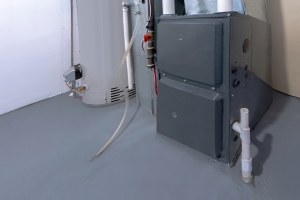
National lifespan averages assume national usage patterns, but Westchester County’s cold season is longer and harder than those averages reflect. Winters here bring January averages around 29 degrees, with sustained cold that keeps furnaces running from late October well into April.
That translates into more run hours per year, more ignition cycles, and more thermal wear on every component. A furnace rated for 20 years of average national use may reach that same level of accumulated wear in 16 or 17 years of Westchester service.
Older homes compound the effect because their construction predates modern insulation standards. Single-pane windows, under-insulated attics, and drafty construction force the furnace to work harder per square foot than the same unit would in a newer home.
When Extending Stops Being Worth It
For relatively new furnaces, regular maintenance helps extend the unit’s service life. When a unit reaches roughly 15 years, maintenance focuses more on keeping it running reliably through the season. Annual service at this stage reduces the chance of a mid-season breakdown, but doesn’t add meaningful years to the system’s total run.
Older units also lose efficiency as burners, heat exchangers, and blower components wear out. Current ENERGY STAR certified furnaces for the northern states start at 95% AFUE, and upgrading to one saves northern-region homeowners an average of $1,345 over the system’s lifetime, with annual savings around $160 per year according to ENERGY STAR.
If you are wondering where your furnace stands, the honest answer depends on more than its age. The system type, installation quality, maintenance history, and construction of your home all play a part. A. Borrelli Mechanical has been evaluating furnaces in Westchester homes since 1981. Contact us online to schedule a furnace lifespan check. Your family’s comfort, our family’s commitment.