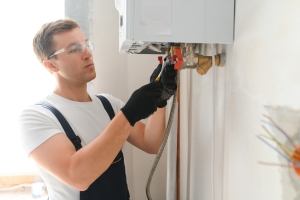
A boiler installation is rarely as simple as disconnecting an old unit and replacing it with a new one. In an older Westchester home, the job can involve sizing the equipment, removing the existing boiler, updating venting and piping, installing controls and safety devices, and testing the finished system through a full heating cycle.
The type of heating system also changes the equation, since steam equipment and hot water boilers are not evaluated or handled in the same way. Steam boilers operate at higher temperatures and are inherently less efficient than hot water boilers, according to the U.S. Department of Energy (DOE), so the existing system shapes many installation decisions.
Sizing Comes Before the Old Boiler Comes Out
A professional boiler replacement begins while the existing equipment is still in place. For a hot water system, the contractor should calculate how much heat the house loses under design conditions because the capacity printed on the old boiler doesn’t provide the same information.
Homes change over time. New windows, added insulation, air sealing, and other improvements can reduce heating demand considerably. Industry estimates cited by ACHR News suggest roughly 85% of U.S. boilers were incorrectly sized, with most oversized.
Oversizing can cause boiler short cycling, where the burner repeatedly starts and stops because the equipment produces heat faster than the house needs it. Frequent cycling can waste fuel and shorten equipment life.
Steam sizing follows a different process. A contractor generally measures the connected radiators and calculates their square feet of radiation, often expressed as equivalent direct radiation, or EDR. Homeowners comparing proposals should be wary of any boiler size calculation based solely on the home’s square footage or the old unit’s rating.
Choosing Between Condensing and Non-Condensing Equipment
Equipment selection affects both efficiency and installation requirements. Older natural-draft boilers can have AFUE ratings of 70% or less, while today’s condensing boilers can reach 90% or more.
A modulating condensing boiler extracts additional heat as the exhaust condenses into water vapor. Modulation allows the burner to reduce its firing rate when the house needs less heat. A downside is the acidic exhaust, which likely needs a lined chimney, increasing the installation cost.
Real-world performance still depends on the heating system around the boiler. Building America guidance notes that return-water temperatures below about 130°F promote condensing operation. Outdoor-reset controls can adjust boiler-water temperatures as outdoor conditions change, helping the system run efficiently during milder weather.
Removal, Venting, and Chimney Work
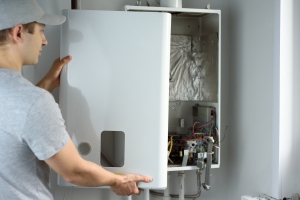
Once the equipment has been selected, the old boiler can be disconnected and removed. The new installation also requires evaluating existing gas or oil connections, electrical service, piping, venting, and the chimney.
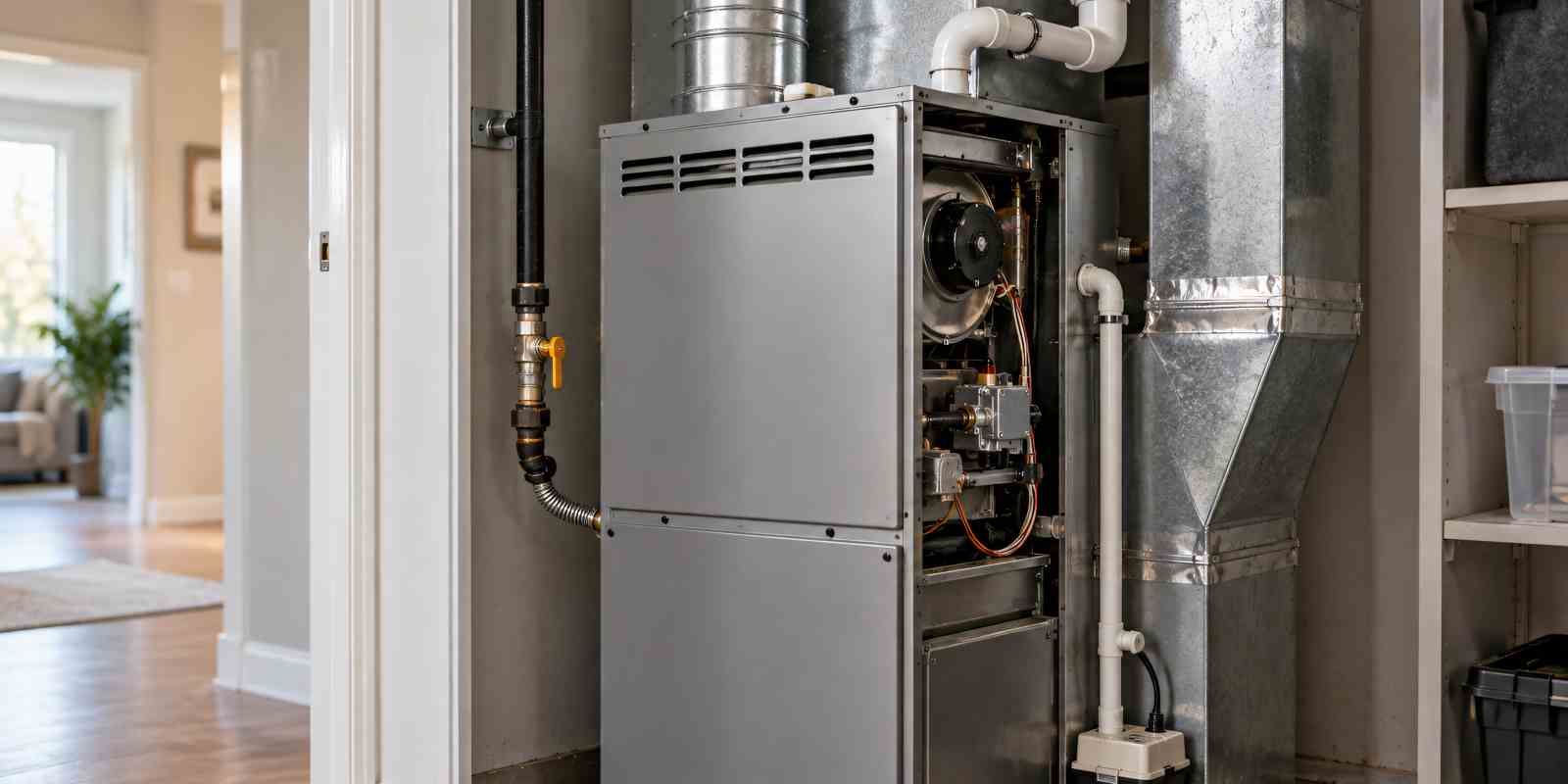
High-efficiency equipment (80% or more) can substantially change the venting plan. A condensing boiler may use dedicated intake and exhaust piping and requires a way to handle acidic condensate. A conventional boiler using an existing chimney requires a chimney and liner suitable for the new appliance.
One easily overlooked issue occurs when a boiler and gas water heater share a chimney. Once a boiler is switched to its own direct-vent system, the remaining water heater may no longer produce enough exhaust to vent properly through a chimney originally sized to serve both appliances. Resizing or relining may then become part of the project.
Several conditions can affect boiler installation cost and timing:
- Chimney condition and required liner work
- New intake and exhaust vent routes
- Condensate drainage or neutralization
- Changes to existing near-boiler piping
- Circulators, zone controls, or electrical upgrades
- A water heater that previously shared the boiler flue
Those details help explain why two boiler proposals can differ even when both contractors recommend similarly sized equipment.
Piping, Controls, and Safety Devices
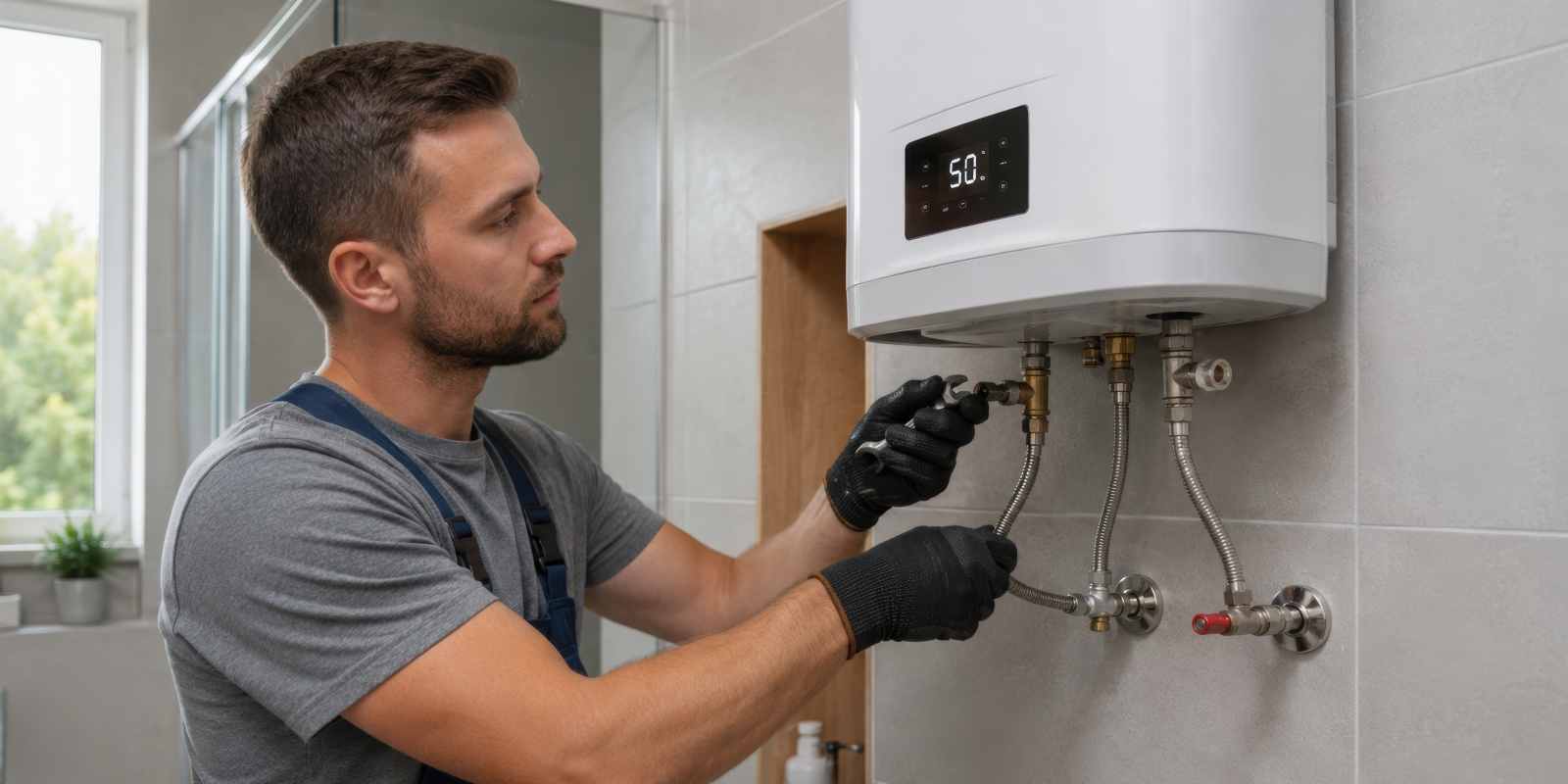
Near-boiler piping connects the appliance to the home’s heating system and controls how water or steam moves through it. A hot water installation may include circulators, zone valves, an expansion tank, air-removal components, isolation valves, and temperature controls.
Zoning allows separate areas of a hot water heating system to operate on individual thermostats. Modern controls can also adjust operating temperatures according to heating demand, especially when paired with condensing equipment.
Safety devices are part of the installation. New York’s 2025 Residential Code requires steam and hot water boilers to have low-water cutoff protection, except for certain forced-circulation boilers protected by flow-sensing controls. Relief and operating controls provide additional protection based on system design and equipment requirements.
Startup, Combustion Testing, and the First Heat Cycle
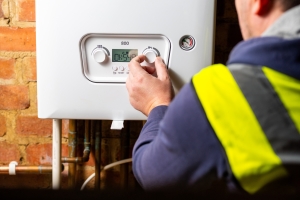
Connecting the final pipe doesn’t finish a new boiler installation. The system still needs to be started, checked, and adjusted. For fuel-burning equipment, combustion testing lets the technician evaluate burner operation using measured combustion data. The technician can then configure controls and operating temperatures for the house instead of leaving them at unsuitable settings.
During the first heating cycle, the technician can check burner operation, circulators or zone valves, system pressure, temperatures, controls, venting, and the response of the home’s radiators or baseboards. Steam system operation depends on more than simply producing heat. Water levels, pressure settings, and even distribution all require careful consideration.
Fuel-burning homes should also have properly installed and working carbon monoxide alarms. A final walkthrough gives the homeowner a chance to understand the controls, recommended settings, and normal system operation.
A properly planned boiler installation starts with understanding the house and heating system, then selecting equipment that fits both. For homeowners considering boiler replacement in Westchester, careful sizing, venting, piping, controls, and startup testing can make the proposal much easier to understand. Call A. Borrelli Mechanical at (914) 359-3479 to schedule a boiler installation consultation with the family-owned team that’s been serving Westchester since 1981.