Finding ice on your air conditioner during the hottest part of summer can be concerning. If your AC freezing up has left your home feeling warmer than it should, the problem won’t disappear by letting the system keep running.
Understanding what causes the ice and knowing what to do next can help you avoid additional damage while getting your cooling system back on track.
| In This Article: Ice on an air conditioner is usually a warning sign that something isn’t working as it should. Below, you will find the main causes of a frozen air conditioner, the safest first steps to take, and the situations that call for professional repair. |
Why an AC Unit Freezes Up in the First Place
If you’re wondering why your AC is freezing up, the cause is often due to restricted airflow or low refrigerant levels.
Your air conditioner relies on a steady flow of warm indoor air across the evaporator coil. As the refrigerant absorbs heat, moisture naturally condenses on the coil and drains away. When airflow drops too low, the coil becomes cold enough for that moisture to freeze, creating a frozen evaporator coil.
A blocked filter is a common source of restricted airflow in systems and can contribute to a frozen AC unit. Closed supply registers, blocked return vents, dirty evaporator coils, or blower problems can reduce airflow to the point that the freezing process starts.
Replacing a dirty air filter may improve AC energy consumption by 5% to 15%, according to the U.S. Department of Energy, while also helping reduce avoidable cooling problems.
Low refrigerant is another common cause. Refrigerant circulates through a sealed system, so it doesn’t get “used up” over time. A low refrigerant charge usually means something is leaking, and the resulting pressure loss can cause the coil temperature to drop too far.
The EPA explains that refrigerant in a residential AC system should remain in a sealed loop, and low levels typically indicate a leak that needs repair.
Running many standard air conditioning systems during unusually cool outdoor weather can create similar conditions, particularly when temperatures fall below the manufacturer’s recommended operating range.
What to Do the Moment You Discover Ice on the Unit
When there is a frozen AC unit inside your home or ice buildup on refrigerant lines, taking quick action can help limit damage to the system.
Start by changing the thermostat setting from Cool to Off. Turning off the compressor prevents additional ice from forming while giving the system a chance to thaw.
After that, change the fan setting on the thermostat to On. Air circulating across the evaporator coil can help speed the thawing process as long as the blower is operating normally.
While waiting for the ice to melt, inspect your air filter and replace it if it’s dirty, then check every supply register and return vent throughout the house. Airflow can be blocked by household items like furniture, curtains, rugs, or boxes placed too close to vents.
If you’re looking for a quick fix for AC freezing up, restoring airflow and allowing the system to thaw are the safest first steps. Heavy ice buildup may take several hours to melt completely, so be patient before restarting the system.
What Not to Do When the Unit Is Frozen
Trying to rush the thawing process may harm the equipment, especially if you chip at the ice or use hot water.
Avoid breaking ice off the coil or refrigerant lines, as these parts can be damaged easily. The aluminum fins bend easily, and the refrigerant tubing can be punctured with surprisingly little force.
Avoid using hair dryers, heat guns, boiling water, or other concentrated heat sources. Allow room-temperature air and the indoor blower to melt the ice naturally.
Resist the temptation to turn the air conditioner back on before every trace of ice has disappeared. Restarting the system too soon often causes the coil to freeze again almost immediately, worsening the original problem.
When the Freeze-Up Keeps Coming Back
Sometimes a freeze-up happens because of a dirty filter, and the problem disappears after replacing it. Repeated freezing tells a different story.
If ice returns within a few days, the system may have a refrigerant leak, a dirty evaporator coil, a blower issue, or another mechanical problem limiting airflow or affecting refrigerant pressure.
Low refrigerant shouldn’t be topped off without further testing. Since refrigerant circulates inside a sealed system, technicians first need to identify where it’s escaping before repairing the leak and restoring the proper charge.
A recurring AC unit freezing up in Westchester is usually a sign that the underlying issue hasn’t been corrected.
Signs the Problem Requires a Technician Rather Than Another Home Reset
Some warning signs point toward professional diagnosis rather than another round of thawing and restarting.
Contact a professional HVAC technician when you notice:
- Ice returning after replacing a dirty filter
- Hissing sounds near the refrigerant lines
- Weak airflow from multiple vents
- Cooling performance that continues to decline
- Water collecting around the indoor air handler
- A visibly dirty evaporator coil
Cleaning an evaporator coil requires care because the delicate aluminum fins bend easily. The U.S. Department of Energy notes that airflow problems, dirty coils, and refrigerant issues all affect system performance and should be properly diagnosed.
If your AC is not cooling your house in Westchester, NY, and freezes again after the system has thawed, it’s time to schedule service rather than repeating the same reset process.
Get a Diagnosis Before the System Sustains Further Damage
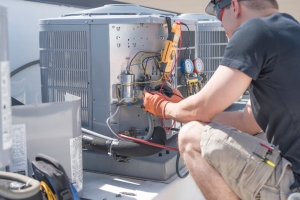
A frozen air conditioner is almost always pointing to another problem that needs attention. Waiting for the ice to melt without addressing the underlying cause can lead to repeated breakdowns and longer periods without cooling during the hottest part of summer.
If your AC freezing up has happened once, checking the filter and airflow is a smart first step. If it freezes again, a professional diagnosis can identify the source before the problem grows into a much larger repair.
You shouldn’t have to keep shutting your system down every few days and hoping the ice stays away. Contact A. Borrelli Mechanical’s Westchester AC repair specialists today to identify the cause of your frozen system and restore reliable comfort throughout your home.