Updated on October 29th, 2026
Yes, a water heater can cause a high electric bill, and a failing one can raise it a lot. Hot water is one of the biggest energy loads in most homes, so a thermostat set too high, a tank full of sediment, a heating element stuck on, or a slow leak shows up on the bill fast. Gas units do the same thing to a gas bill.
Below are the eight most common causes, a simple meter test to confirm the culprit, and how to choose between repair and replacement.
How Much of Your Bill Is Hot Water?
Water heating accounts for roughly 18% of the energy used in a typical home, based on Department of Energy estimates cited by Rheem. Your share may be higher in a big household with a standard electric tank, so treat 18% as a starting point. If the meter test below shows your heater using well over that slice and nothing at home has changed, the heater itself is the likely problem.
8 Signs Your Water Heater Is Running Up the Bill
1. The thermostat is set too high
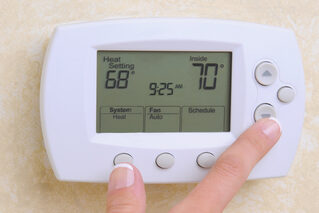
Many tanks end up set around 140°F, either from the factory or from a previous owner. The Consumer Product Safety Commission recommends 120°F to prevent scalds and notes the lower setting also saves energy and money. Rheem puts the savings from dropping about 20°F at roughly 4% to 22% of water heating costs.
To check, hold a kitchen thermometer under the hot tap first thing in the morning. On electric units the thermostats sit behind panels next to live wiring, so let a technician change them. If someone at home has a weakened immune system, ask us about a higher setting paired with anti-scald mixing valves.
2. Sediment has built up in the tank
Minerals in tap water settle in the tank and coat electric elements with scale, so the burner or element runs longer for the same hot water. Rumbling or popping sounds are the classic sign.
A.O. Smith’s manual recommends draining and flushing after the first six months, then at least once a year depending on your water hardness. A basic flush is a fair DIY job if you follow your manual, or we can handle it during an annual plumbing maintenance visit. On a tank that has never been flushed, the drain valve can clog or refuse to reseal, so leave older neglected tanks to a pro.
3. An electric element or thermostat has failed “on”
A dead heating element usually means lukewarm water, not a bigger bill. The trouble comes from parts that fail on. A thermostat stuck closed keeps an element heating past its set point, and a shorted element can do the same.
A.O. Smith’s use and care guide notes that a shorted element or a nonfunctioning thermostat can cause extremely hot water and make the relief valve dump large amounts of it. Scalding water at the tap or hot water running from the relief valve pipe calls for service, and this is electrical work, not a DIY fix.
4. Hot water is leaking somewhere
Every gallon that leaks out is a gallon you already paid to heat.
- The T&P relief valve drips. A small drip usually points to high water pressure or a missing or failed expansion tank. Test the valve per the manufacturer’s label and call us if it keeps dripping. Never cap or plug it.
- The tank itself leaks. Water pooling at the base of the tank body is serious and usually means replacement.
- A hot water line leaks. A pinhole leak inside a wall or under a slab may show up only on the bill.
5. The heater is getting old
Rheem says most conventional tank water heaters last around 10 years and recommends planning for replacement at that point. With age, scale and worn parts mean it burns more energy for the same hot water. You can usually find the manufacture date on the data plate, or we can decode the serial number for you.
6. The tank is the wrong size
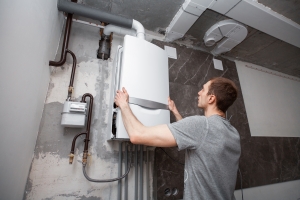
An oversized tank keeps more water hot than you use, so it loses more heat while it sits. An undersized tank runs nearly nonstop, wears out sooner, and often gets turned up hotter to stretch the supply. Our guide on choosing the right tank size walks through the math.
7. Heat is escaping from a bare tank and pipes
A tank reheats its water around the clock, even when nobody uses any, and older tanks with thin insulation lose the most. A Department of Energy weatherization job aid calls for insulating older electric tanks and the first six feet of hot and cold pipes.
Pipe insulation is an easy DIY job. For a tank blanket, check the label first, since some manufacturers prohibit them, and never cover the relief valve, controls, or panels. On gas units, have a pro do it so nothing blocks the burner or vent.
8. Your household’s hot water use changed
Sometimes nothing is broken. A new baby, teenagers with long showers, or holiday guests all raise hot water use, and colder incoming water in winter takes more energy to heat. Ask what changed at home before blaming the heater.
Is It Really the Water Heater? Try This Meter Test
Most guides stop at a list of causes. This test tells you whether the water heater is actually the problem, using only your meter and a notepad.
Electric water heaters
- Find the breaker labeled for the water heater. If your panel is not clearly labeled, stop and call us rather than guessing, and never remove the panel cover.
- On a typical evening, write down the kWh reading on your electric meter and the time.
- Read it again 24 hours later. That is a normal day.
- On a day with similar weather and appliance use, switch off the water heater breaker for 24 hours and take the same two readings. Pick a day you can skip hot water.
- Subtract the breaker-off day from the normal day. The difference is roughly what your water heater uses per day.
- Multiply that number by 30, then by the price per kWh on your bill, for a monthly cost. Switch the breaker back on.
Run it twice if your air conditioning or dryer use varies a lot. If the heater takes a big slice and your habits have not changed, look at causes 1 through 4.
Gas water heaters
In warm weather with the heat off, read your gas meter at bedtime, use no hot water overnight, and read it again in the morning. A tank that is losing heat or water fast will burn noticeable gas overnight. Do not touch the gas control or burner.
A quick leak check
Turn off every faucet and appliance, then watch the leak indicator on your water meter for 15 minutes. If it moves, close the cold water valve above the water heater. If the indicator stops, the leak is on the water heater or hot water side. If that valve is stiff, do not force it.
High Oil or Gas Bill? Check Your Boiler’s Hot Water Setup
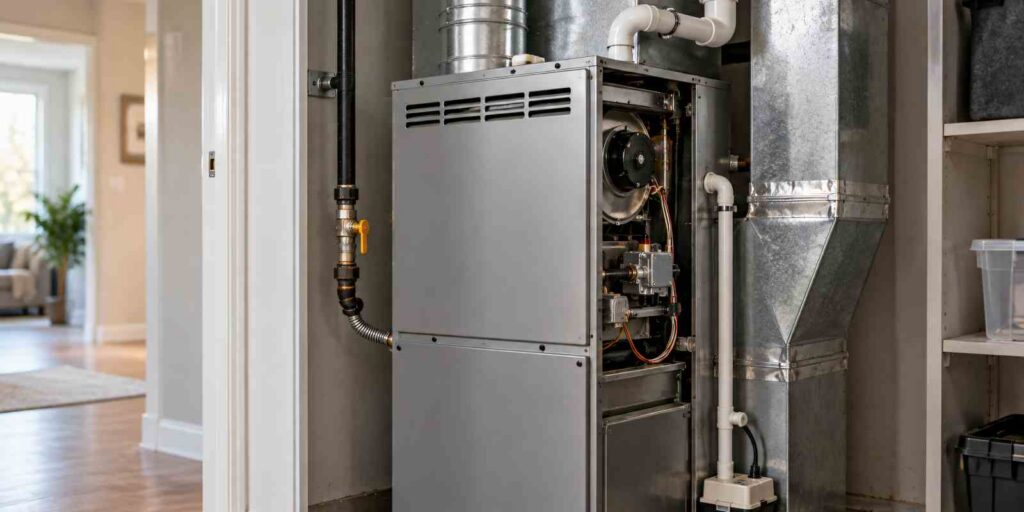
Many older Westchester homes with boilers make hot water with either a coil inside the boiler, called a tankless coil, or an indirect tank that the boiler heats.
A tankless coil keeps the boiler hot all year just to supply showers, which is why summer oil or gas bills in those homes barely drop. Department of Energy guidance rates indirect tanks as more efficient for most homes, because stored hot water lets the boiler fire less often. If your summer bills look like spring bills, our boiler repair and installation team can tell you whether a switch makes sense.
Repair or Replace?
| Situation | Usually the better call |
|---|---|
| Under about 8 years old, one failed part such as an element, thermostat, or relief valve | Repair |
| Sediment noise on a sound tank | Flush and monitor |
| Dripping relief valve with high water pressure | Fix pressure or add an expansion tank |
| Water leaking from the tank body | Replace |
| Rusty hot water, around 10 years or older, repeat repairs | Replace |
Once the tank body leaks or corrodes, Rheem notes replacement is often the only safe and cost-effective path. Our water heater repair and installation team handles tank and tankless units, and our guide to deciding when to replace covers the tradeoffs. If you go electric, ask about heat pump models, which use far less electricity than a standard electric tank.
If the meter test points at your water heater, let a licensed technician find the cause before another month of wasted energy. Contact A. Borrelli Mechanical or call (914) 809-9070 to schedule a water heater inspection anywhere in Westchester, Putnam, or Dutchess.
Frequently Asked Questions
Yes. A failed thermostat that sticks closed or a shorted heating element can keep an electric tank heating past its set point, which wastes power and can make the relief valve discharge hot water. Leaks, heavy sediment, and a thermostat set too high also raise usage. A dead element alone usually just means less hot water.
It can. Most conventional tanks last around 10 years. With age, scale coats the elements, sediment builds in the tank, and insulation and parts wear, so the heater runs longer to deliver the same hot water. A sudden jump in the bill is more often a failed part or a leak than gradual aging.
The Consumer Product Safety Commission recommends 120°F for most homes. That setting cuts scald risk and reduces standby heat loss. Some households need hotter water, such as homes with a dishwasher that lacks a booster heater or someone with a weakened immune system, and anti-scald mixing valves at the taps make a higher setting safer.
For trips of several days or longer, lowering the setting saves energy. Many newer tanks have a vacation mode that holds the water at a low temperature. If your water heater sits unused for two weeks or more, A.O. Smith advises running a hot water tap for a few minutes before using electrical appliances nearby.