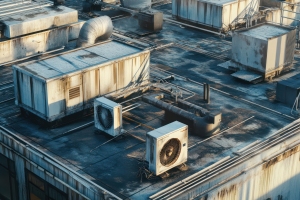
If rising utility bills and repeat service calls are wearing down your operating budget, outdated equipment may be the real issue. Many view commercial HVAC installation as a last resort, but aging systems silently waste money long before they stop functioning.
In Westchester County, where energy prices are high and buildings run heat and cooling for much of the year, older systems can quickly become an expensive liability.
| In This Article: We examine the real cost of aging commercial HVAC systems in Westchester and how professional installation can improve efficiency, reliability, and financial performance |
How Outdated Systems Quietly Drain Your Budget
Commercial heating and cooling equipment is one of the largest energy users in a typical building.
Federal energy data shows HVAC-related loads account for a major share of commercial energy use nationwide. As systems age and efficiency gradually declines, owners often see higher bills before they experience a full breakdown.
Below are four recurring sources of unnecessary expense that we commonly identify in commercial buildings across Westchester.
1. Rising Utility Costs from Declining Efficiency
Rooftop units and packaged systems often last 15 to 20 years, but that doesn’t mean they operate at peak performance for two decades.
Over time, airflow drops, sensors drift, coils collect debris, and economizers fail to open properly. The system may still heat and cool, yet it runs longer to maintain the setpoint.
In New York, this inefficiency becomes even more pronounced. Recent statewide figures indicate that commercial electricity rates have remained near or above 20 cents per kilowatt-hour during many months of the year.
Natural gas costs add pressure during the heating season. When a system cycles longer or runs fans continuously, you feel it on every monthly statement.
Energy-efficient HVAC systems can cut cooling and ventilation energy use by 20 to 50% in eligible applications. Those savings add up quickly in buildings operating year-round.
2. Emergency Repairs and Reactive Maintenance
Older equipment shifts maintenance from planned to reactive, as belts can snap, compressors may struggle, and controls commonly fail in peak season.
Emergency service calls almost always come at a much higher cost than planned maintenance visits, particularly when demand spikes during summer heat waves or the coldest stretches of winter.
Facility managers often tell us the same story. Service calls start happening every few months and then every few weeks. At that stage, you’re paying twice: once in inflated utility bills and again in unpredictable repair invoices.
Industrial HVAC maintenance in New York emphasizes preventive strategies for a reason. Planned maintenance stabilizes performance and reduces surprise failures. When repair frequency increases, it’s often a sign that the economics of replacement deserve serious evaluation.
3. Comfort Complaints and Productivity Loss
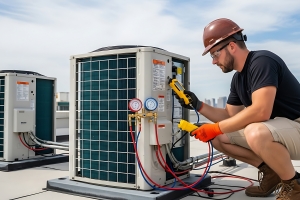
Common symptoms of aging systems include uneven temperatures, humidity swings, and stale air. One zone feels too warm, while another is cold. Employees keep changing thermostat settings throughout the day, and temperature-related complaints start becoming a regular part of operations.
Research on indoor air quality links ventilation and temperature stability to improved productivity and cognitive performance. Office occupants spend the majority of their time indoors, so air quality and thermal comfort affect daily operations.
Commercial heating and cooling in NY buildings must handle both hot, humid summers and cold, dry winters. When equipment struggles to maintain consistent airflow or humidity control, comfort issues escalate.
That translates into tenant dissatisfaction, employee distraction, and potential turnover in leased spaces.
4. Delayed Capital Decisions That Grow More Expensive
Commercial properties often exhibit a tendency towards run-to-failure thinking. As long as the equipment keeps operating, replacements get postponed. In many cases, timing is what turns a manageable issue into a costly one.
Emergency replacement during peak season limits equipment options and contractor availability. Rather than planning the next step on your own terms, you’re pushed into making rapid decisions in a high-pressure moment.
Planned Commercial HVAC replacement in Westchester gives owners time to evaluate load requirements, operating hours, ventilation needs, and rebate opportunities. Owners who schedule upgrades strategically often gain better pricing, broader equipment selection, and fewer disruptions to tenants or staff.
Why This Hits Harder in Westchester County
Westchester buildings experience both significant heating demand and meaningful cooling loads each year. Shoulder seasons reveal control problems: summer exposes airflow and capacity issues, while winter highlights heating performance problems.
High electricity rates magnify cooling inefficiency, and gas prices keep heating costs under scrutiny. Older systems strain in both seasons, making them expensive year-round.
Con Edison and NYSERDA programs offer incentives for qualifying upgrades. Those rebates can offset upfront investment in energy-efficient HVAC systems, improving payback timelines for many businesses.
Signs It’s Time for a Professional Evaluation
If you’re still weighing whether replacement is the more cost-effective choice, these signs can help point you in the right direction:
- Equipment age approaching or exceeding 15 to 20 years
- Increasing repair frequency or larger component failures
- Rising utility use without major occupancy changes
- Ongoing hot and cold complaints
- Difficulty holding setpoint during extreme weather
- Noticeable noise or vibration from rooftop units
Even when the system continues to operate every day, these warning signs often suggest that its overall performance is starting to slip.
How Commercial HVAC Installation Improves ROI
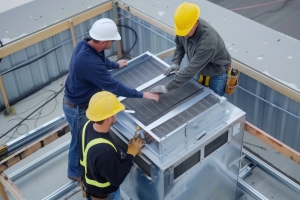
A well-planned commercial HVAC installation addresses energy waste, repair risk, and comfort instability all at the same time. Modern equipment offers improved controls, variable-speed fans, better ventilation management, and higher efficiency ratings.
Other common benefits typically include:
- Lower electric and gas consumption
- Reduced emergency service exposure
- More predictable maintenance costs
- Improved temperature and humidity stability
- Better indoor air quality
- Eligibility for utility incentives
Make the Numbers Work for Your Business
Outdated equipment can look serviceable on the surface while draining thousands of dollars each year through inefficiency and reactive repairs. In a high-cost energy market such as Westchester County, that gap widens quickly.
At A. Borrelli Mechanical, we bring decades of local expertise to these projects. As a family-owned company serving Westchester since 1981, our team understands regional climate demands, utility structures, and building types. Our local experience allows us to provide informed comparisons between repair and replacement based on real operating data.
Commercial HVAC installation goes beyond an equipment swap, giving businesses a way to take back control of operating expenses while creating a more reliable system for years to come.
If your building is showing the warning signs, scheduling a professional evaluation could help clarify where your money’s going and how much you could recover through strategic upgrades.