When snowpack melts and spring rain starts soaking the ground, your basement becomes the lowest collection point on your property.
That’s why proper sump pump maintenance and a practical spring plumbing checklist deserve your attention before the first heavy thaw. A little preparation now supports real basement flood prevention, helping you avoid soaked flooring, damaged drywall, and the disruption of emergency plumbing repairs.
Homeowners who stay ahead of seasonal risks protect their investment and avoid the stress of preventable water damage. If you’re someone who values home equity and wants fewer surprises, this is the time to act.
| In This Article: Learn how to handle essential sump pump maintenance, follow a smart spring plumbing checklist, strengthen basement flood prevention, spot early warning signs, and apply safe frozen pipe thaw tips before thaw season puts your home at risk. |
Why Thaw Season Pushes Your Basement to Its Limits
As snow melts and spring storms saturate the soil, groundwater levels rise quickly. Water moves toward the path of least resistance, often through small foundation cracks, window wells, or footing drains that lead directly to your sump pit.
If the pump, discharge line, or a related plumbing component isn’t working properly, the first sign is often water on the floor.
For homes experiencing issues after early spring storms, most failures could have been identified weeks earlier with a simple test. A stuck float, a partially frozen discharge line, or a worn check valve can all go unnoticed until the system is under peak demand.
Spring Plumbing Checklist: Start With the Sump Pump
A working sump system is the foundation of basement flood prevention. Here’s how to evaluate yours before the ground fully thaws.
Test the Pump and Float Switch
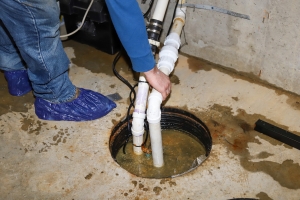
Start by visually checking the sump pit for obvious issues such as debris, standing water, or signs of corrosion around the components.
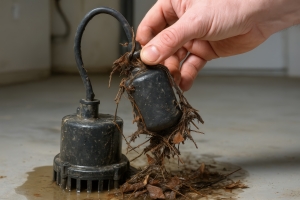
Clear out debris, stones, or accumulated silt that could interfere with the impeller or float. Confirm the pump is seated upright and stable, and check that the power cord and any float-switch cords are free of cracking, fraying, or damage.
Add water to the pit until the float rises, then watch for proper activation and smooth operation through the cycle. The pump should start smoothly, move water efficiently, and shut off cleanly once levels drop.
Checking sump pump float switch performance during this test is essential. If the pump hesitates, short-cycles repeatedly, or runs unusually long, it may be time for service.
Unusual grinding sounds or vibration often signal internal wear. Addressing those early can prevent mid-storm failure.
Inspect the Discharge Line Outside
Your pump can operate perfectly inside while the discharge line outside remains blocked. During your test, confirm that water exits freely at the exterior discharge point.
When checking, take the time to look for:
- Ice buildup near the outlet
- Crushed or disconnected piping
- Water draining too close to the foundation
A frozen or clogged discharge line can force water back into the pit, overworking the pump and increasing the risk of flooding. Redirecting discharge away from the foundation also supports long-term basement waterproofing efforts.
Inspect Check Valve and Power Source
A properly working check valve keeps water from returning to the pit after each cycle, maintaining efficient discharge.
After the pump shuts off, you should hear a soft closing sound and see only minimal water return. Loud slamming or repeated cycling may indicate a failing valve.
Power reliability matters just as much, so take time to confirm the outlet is dependable and not shared with heavy appliances. Spring storms can cause outages, so backup options such as battery systems are worth considering in higher-risk homes.
Don’t Overlook Freeze Damage
Winter stress can weaken pipes even if they never fully burst. As part of your spring home maintenance routine, scan exposed plumbing for corrosion, staining, or damp areas near joints and penetrations.
Musty odors or unexplained humidity can point to small leaks. Early repairs cost far less than full pipe replacements and water restoration work.
If you encounter a frozen section that hasn’t ruptured, follow these safe frozen pipe thaw tips: open a faucet to relieve pressure and use gentle heat, such as a hair dryer or approved heat tape, to address the issue gradually; open flames and boiling water should never be used.
Reduce Sewer Backup Risk

Homes with basement bathrooms, floor drains, or laundry sinks carry added risk during heavy rain. If your neighborhood experiences seasonal surges, it’s wise to have a professional evaluate your drainage setup and discuss backwater protection where appropriate.
Preventive service now supports stronger basement flood prevention during the heaviest storms.
Make Sure Your Basement Ready for Spring Thaw
If your pump hesitates, your discharge line looks questionable, or you’d simply rather have a seasoned technician take a close look, A. Borrelli Mechanical is ready to help. As a family-owned company serving Westchester County since 1981, we understand how quickly thaw season can turn into a water emergency and your family’s comfort remains our family’s commitment.
Our team handles sump pump maintenance, drainage evaluations, frozen pipe concerns, and full-system inspections designed to protect your home before problems escalate. We provide clear recommendations, practical repair-or-replace guidance, and responsive service when you need it most.
Don’t wait until water is on the floor; book service online or call A. Borrelli Mechanical today and schedule your spring plumbing checklist service. The good guys are on the way!